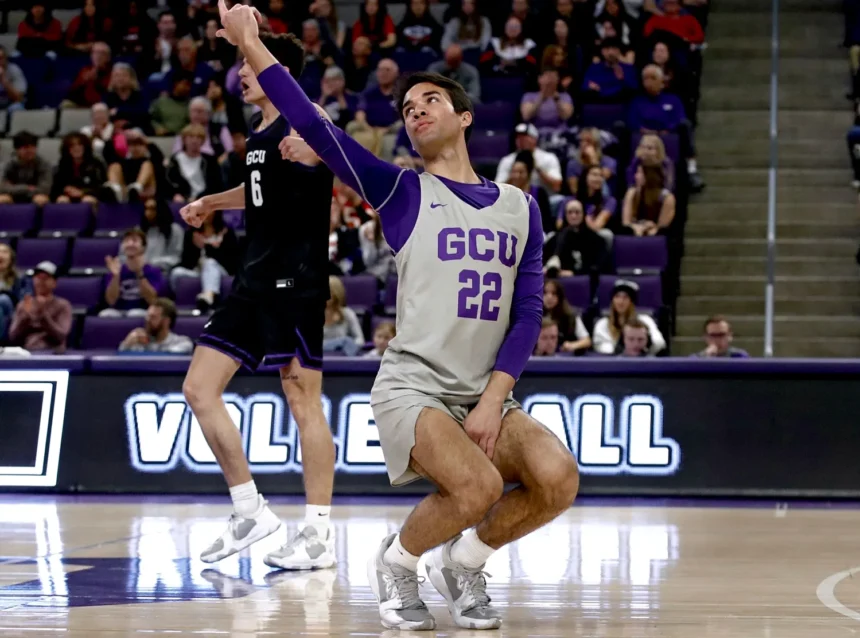
Jordan Lucas, a 22-year-old volleyball player at California State University, Northridge, has become one of college volleyball’s most talked-about athletes after a controversial broadcast remark brought wider attention to his expressive style on the court.
Lucas, who is openly gay, is known for playing with flair, confidence and visible emotion. His celebrations, including hair tosses and finger gestures, have helped him build a growing fan base and brought new attention to the CSUN volleyball program.
Broadcast Comment Sparked Backlash
The attention around Lucas intensified after UC Irvine broadcaster Charlie Brande made a critical on-air comment during an April 9 match.
Brande later apologised after the remark drew public criticism. The backlash also led to a wave of support for Lucas, whose playing style quickly reached a wider audience online.
Lucas told PEOPLE that the comment should not have been made about any athlete. He also said the reaction did not entirely surprise him because he has faced negativity and hateful comments throughout his sports career.
Lucas Says Visibility Comes With Pressure
For Lucas, the viral moment has brought both attention and responsibility.
He said people often respond strongly to the way he plays, either with admiration or criticism. Still, he sees the attention as proof that his presence is being noticed.
Lucas has also said he is using the moment to speak for LGBTQ athletes, particularly in sports where representation remains limited.
CSUN Coach Praises His Resilience
CSUN coach Theo Edwards, who began recruiting Lucas when he was about 14, said he was disappointed by the broadcast comment but encouraged by the support Lucas received afterward.
Edwards described Lucas as a player with intensity, flair and strong athletic ability. He praised his explosiveness, jumping ability and toughness, calling him one of the strongest individuals he has coached.
New Opportunities After Viral Attention
Since the broadcast controversy, Lucas has received increased media and public attention.
According to the source article, he has been featured by major outlets, appeared at a movie premiere, recorded a segment for Good Morning America and been interviewed in public.
Lucas said the attention was overwhelming at first, but he now sees it as an opportunity to represent LGBTQ athletes and challenge narrow ideas of what athletes are expected to look or act like.
Background: How Lucas Found Volleyball
Lucas grew up in an athletic family. His brother played basketball and had a stint in the NBA, his father coaches high school basketball, and his mother played volleyball in high school.
Lucas was introduced to volleyball at 13 while spending time around a school team as he waited for his father to pick him up.
From the beginning, volleyball gave him room to express himself. He also met older LGBTQ athletes through the sport, which helped him see that people like him could belong in athletics.
Personal Loss Behind the Season
Lucas also faced a major personal challenge when his mother, Christina, died in June 2025 after being diagnosed with cancer. She was 56.
Although Lucas continued performing on the court, he was grieving privately. His coach said Lucas initially did not want the team to know because he did not want sympathy or special treatment.
Lucas later shared the news with his teammates after their final match of the season, creating an emotional moment for the team.
Life Beyond Volleyball
Away from the court, Lucas stays active through activities such as pickleball and Wiffle ball with friends and family.
He also enjoys travelling and listening to artists including Tate McRae and Megan Thee Stallion.
As for his future, Lucas has not ruled out playing professionally after college, but he said he is also focused on discovering who he is outside volleyball.
Why Jordan Lucas’ Story Matters
Jordan Lucas’ story matters because it goes beyond one viral sports moment.
His rise highlights the challenges LGBTQ athletes can face when they express themselves openly, especially in competitive environments that often reward narrow ideas of masculinity and athletic behaviour.
At the same time, the support he has received shows that many fans are ready to embrace athletes who compete with authenticity as well as skill.
Conclusion
Jordan Lucas did not become a viral figure by changing who he is. He became widely known because more people finally saw the confidence, talent and personality he had already been bringing to the court.
For Lucas, the attention is now about more than volleyball. It is a chance to represent himself, support other LGBTQ athletes and continue building a future on his own terms.