In early January 1996, winter didn’t just arrive in the northeastern United States — it took over.
For three days, from January 6 to 8, a massive nor’easter blanketed cities, towns, and highways with relentless snow, reshaping daily life from the Carolinas to New England. What became known as the Blizzard of 1996 is still remembered not just for how much snow fell, but for how completely it slowed the region to a halt.
For many who lived through it, the memories are visceral: silence after the plows stopped, buried cars, and streets that felt suddenly unfamiliar.
Snowfall Measured in Feet, Not Inches
The numbers alone tell part of the story.
In New York City, nearly two feet of snow fell in a matter of hours, swallowing sidewalks and turning intersections into white walls. In Philadelphia, the storm dropped close to 31 inches — the highest snowfall total ever recorded there.
Rural parts of West Virginia fared even worse, with some areas seeing as much as four feet of snow, according to the National Weather Service. The storm’s reach extended as far south as South Carolina and as far north as Maine, with impacts felt west into Kentucky.
A Region Comes to a Standstill
The blizzard didn’t just inconvenience people — it immobilized them.
Air travel across much of the country ground to a near stop. Newark Airport recorded more than 27 inches of snow and endured its longest shutdown on record. Major highways became parking lots, including Route 93 in Massachusetts, where drivers were stranded for hours.
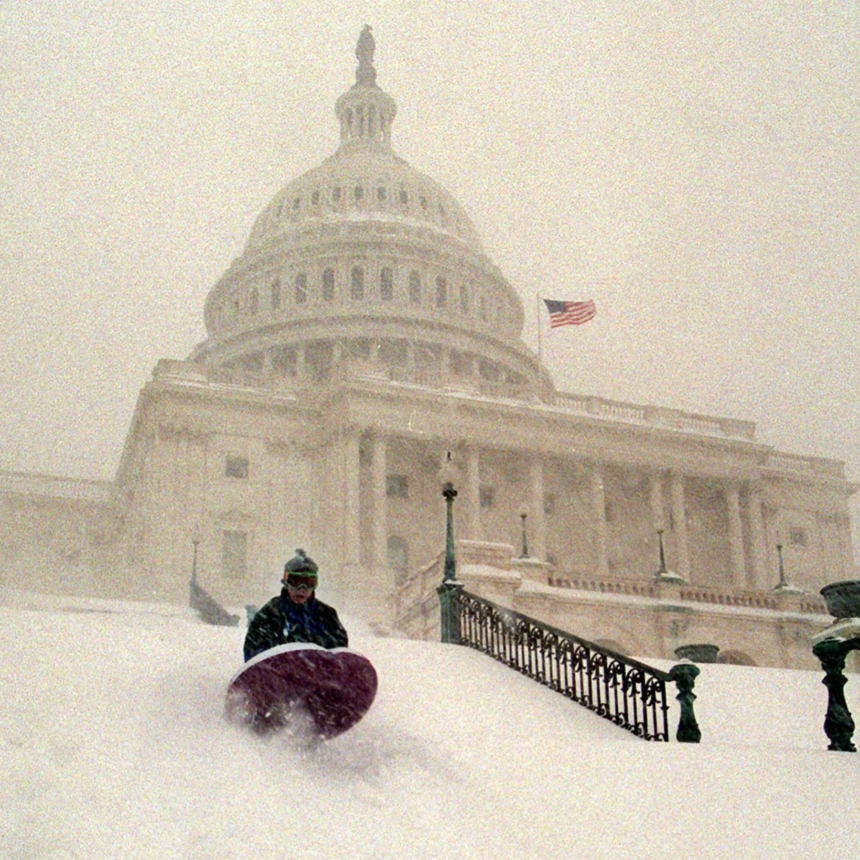
In cities like Washington, streets emptied. Sidewalks disappeared under drifts. Even walking a block became an effort.
President Bill Clinton shut down the federal government for nearly a week — an extraordinary move that underscored the storm’s severity.
Loss, Damage, and Long Nights
The storm’s toll went far beyond snowbanks.
Up to 60 deaths were reported across eight states, from heart attacks during shoveling to traffic accidents and exposure. Property damage across 18 states approached $600 million, with roofs collapsing under the weight of snow and power lines falling as trees snapped.
Power outages spread through multiple states, leaving some residents without heat or light during frigid nights. Cleanup took days — and in some communities, nearly a full week.
Improvisation, Help, and Small Moments of Joy
Yet amid the disruption, people adapted.
Skis appeared on city streets. Sleds replaced cars. Children turned buried hills into playgrounds, while adults shoveled paths not just for themselves, but for neighbors who couldn’t manage alone.
Volunteers helped clear roads and check on stranded drivers. Local crews worked around the clock, often with limited equipment, to reconnect neighborhoods cut off by snow.
For many, the storm remains a reminder of how quickly communities can pull together when normal routines disappear.
Why the Blizzard of 1996 Still Matters
Nearly three decades later, the Blizzard of 1996 stands as one of the most severe winter storms of the 20th century.
It exposed the vulnerability of transportation systems, power grids, and emergency planning under extreme weather. It also showed how deeply weather can shape economic activity, public safety, and everyday life — lessons that still resonate as climate patterns grow more unpredictable.
A Storm That Became a Marker in Time
For those who experienced it, the Blizzard of 1996 isn’t just a weather event. It’s a reference point.
Life before the storm. Life after. The week when everything stopped — and people learned how to move, help, and wait together.
Long after the snow melted, the memory stayed.