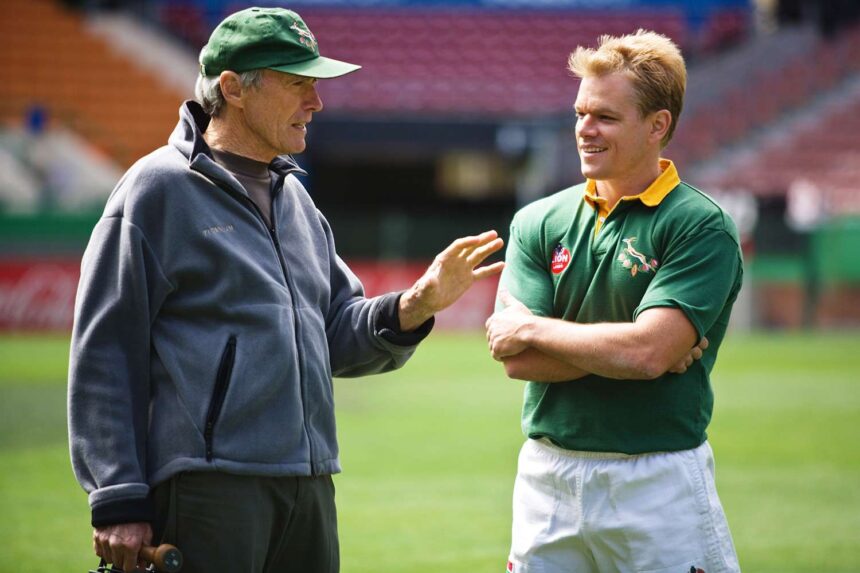
When Matt Damon showed up to set for Invictus in 2009, he thought he was prepared for anything.
He had spent six months working full-time with a dialect coach, shaping every vowel and rhythm needed to convincingly portray South African rugby captain Francois Pienaar. He was focused, serious, and ready to prove himself.
What he didn’t expect was how quickly Clint Eastwood would teach him a lesson that stayed with him long after the cameras stopped rolling.
One Take — and Moving On
Speaking recently on the podcast Conan O’Brien Needs a Friend, Damon recalled his first day working under Eastwood’s direction.
After Damon delivered his opening scene, Eastwood simply said, “That’s good,” and immediately moved on to the next setup.
No notes. No adjustments. No second take.
Damon, fresh from months of preparation, assumed another take was standard. He politely asked if they could do it again.
Eastwood declined.
Not harshly. Not dismissively. Just firmly.
A Director Who Respects the Clock — and the Crew
According to Damon, Eastwood explained that if the take worked, there was no reason to repeat it. Redoing scenes unnecessarily, he suggested, wasted time and energy — not just for the director or the actor, but for the entire crew standing by.
It was a philosophy built on momentum and trust.
Eastwood trusted that his actors had done the work. And once he saw what he needed, he didn’t second-guess it.
Damon said the exchange wasn’t tense or uncomfortable. In fact, he described Eastwood as calm, kind, and deeply professional.
But the message landed.
A Shift in Perspective
For Damon, the moment reframed what good directing could look like.
Instead of endless takes chasing perfection, Eastwood valued clarity, confidence, and efficiency. If the emotion was there and the story moved forward, that was enough.
Damon said it changed how he thought about performance — and about respecting the collective effort on a film set, where hundreds of people rely on forward motion to do their jobs well.
A Film That Went On to Make History
That first-day lesson came on a project that would become one of Damon’s most meaningful roles.
Invictus, which told the story of Nelson Mandela’s use of sport to unite post-apartheid South Africa, earned major awards recognition. Damon received Golden Globe and Academy Award nominations for his performance.
Looking back, the experience feels fitting.
A film about leadership, trust, and unity was shaped by a director who embodied those same values behind the camera.
Why This Story Resonates
In an industry often associated with ego and excess, Damon’s memory offers a quieter truth.
Sometimes the most influential moments aren’t dramatic speeches or career-defining wins — but a calm reminder, delivered on day one, that confidence and respect can be just as powerful as perfection.
And sometimes, one take really is enough.